Table of content
Hey, reader 🖐
Let's talk about your current issues related to onboarding, offboarding and everything in between!
There are five established channels for buying enterprise laptops: direct from the OEM business stores (Dell, Lenovo, HP, Apple), through resellers and VARs (CDW, Insight, SHI), consumer retail, certified refurbished suppliers, and leasing or Device-as-a-Service programs. All five can work well when your team sits in one country. When your team spans 10 or 15 countries, each of them turns into a per-country project with separate quotes, customs, and importer-of-record headaches. That's where a device lifecycle management platform earns its place: quipteams sources locally in 155 countries through 400+ local vendors, delivers pre-configured devices in 4 business days, and manages the full device lifecycle (procurement, retrieval, storage, buyback) on one platform.
Each channel below is genuinely the right answer for somebody. Here's how they compare, with the honest trade-offs, plus a decision framework at the end so you can match your team size and geographic spread to the right option.
1. Direct from the OEM business stores
Dell, Lenovo, HP, and Apple all run dedicated business programs, and if you're standardizing on one brand in one country, buying direct is hard to beat on price and configuration control.
- Dell runs business storefronts plus a Business Partnerships program with member-only pricing and a dedicated sales advisor. Note that the partnership discount is capped at 5 products per transaction, up to 6 transactions per year, so real fleet pricing means negotiating a Premier account with a rep.
- Lenovo Pro is a free business membership with tiered savings that deepen as your annual spend grows, plus $100 off your first order over $1,000 and a dedicated business advisor.
- HP Business Club works similarly: tiered membership starting at Bronze with no prerequisite, upgrading to Silver after $2,500 in purchases, then Gold. HP also offers business financing from $5,000 to $250,000, with $1-buyout and fair-market-value plans.
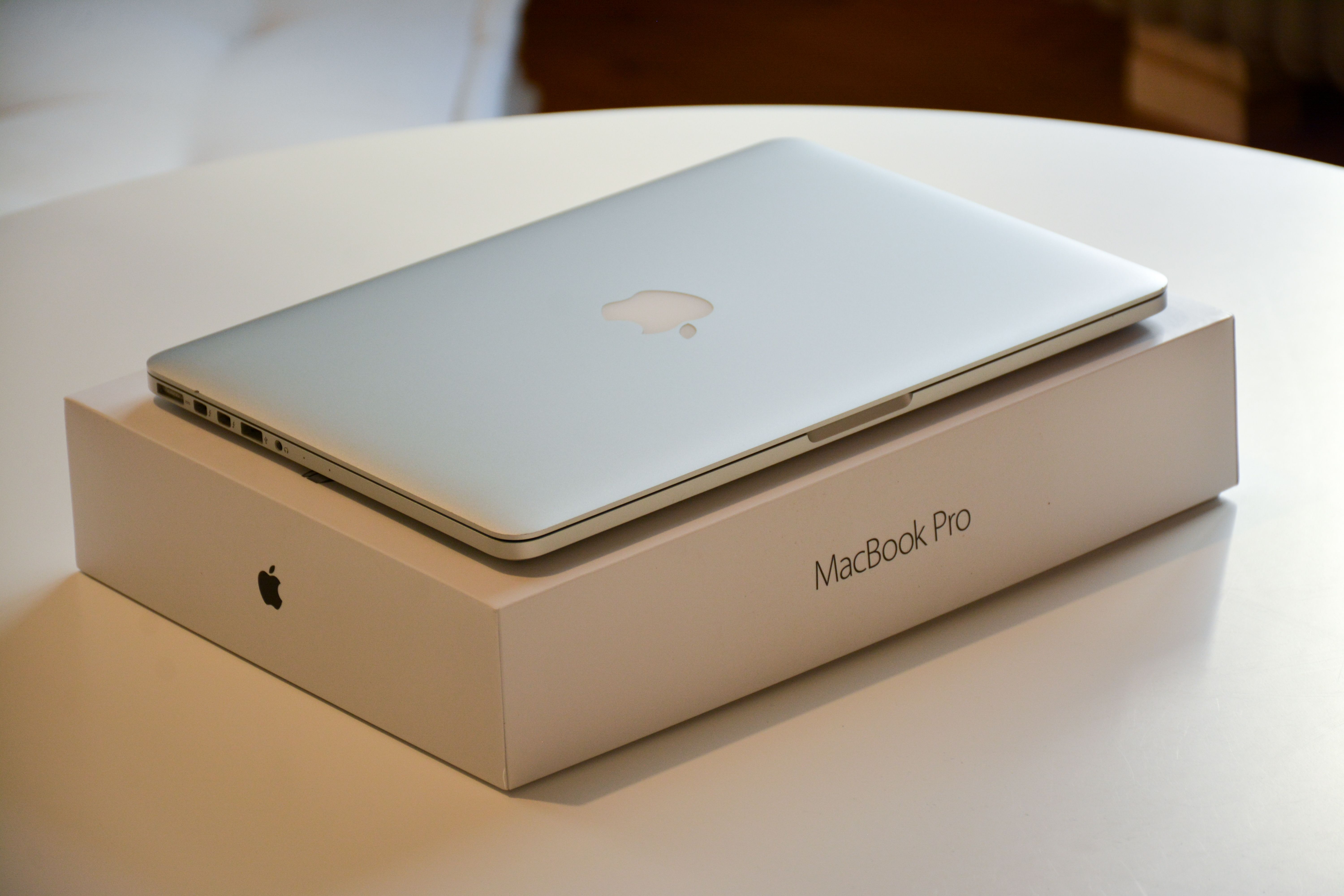
- Apple sells through business teams and supports Apple Business Manager for automated device enrollment, so Macs bought through Apple or participating authorized resellers can enroll into your MDM out of the box.
The catch: minimums for volume pricing are rarely published; bulk discounts are negotiated per account and per region. Each OEM store is also country-specific: Dell US can't invoice your entity in Argentina or ship to your hire in India without you handling the import. And the relationship ends at the loading dock. Coordinating delivery with each employee, recovering the device when someone leaves, and storing it between hires all stay on your plate.
Best for: teams of 25+ in one country standardizing on a single brand.
2. Resellers and VARs (CDW, Insight, SHI)
Value-added resellers like CDW, Insight, and SHI sit between you and the OEMs. You give up a little on unit price versus a hard-negotiated direct deal, and in exchange you get multi-brand sourcing on one invoice plus a services layer: imaging, asset tagging, licensing, and contract negotiation support. Larger accounts typically also get an account manager, one person who quotes, orders, and chases delivery for you. Not every account gets that treatment, though, and how well it's delivered varies. CDW holds a 4.2/5 across 36 ratings on Gartner Peer Insights (accessed August 2026), where buyers praise the breadth of multi-vendor sourcing but some flag slow quotes and cost.
The catch: VARs are strongest in their home markets (primarily the United States and Canada, with European arms). International fulfillment typically still means exporting from a central warehouse, which puts customs and import duties back on your plate. The services layer is also front-loaded: imaging and deployment are covered, but retrieving a device from a departing employee, storing spares between hires, and coordinating door-to-door with each person are generally yours to run.
Best for: mixed-brand fleets, companies that want procurement plus configuration services, concentrated in one or two countries.
3. Consumer retail
Buying from a consumer electronics retailer or marketplace is completely fine in one narrow case: you need one or two machines today, in a country where you have someone to receive them, and you'll expense it.
At any scale it breaks down, for four reasons. First, fleet consistency: retail stock rotates constantly, so the model you bought in March may not exist in July, leaving you with a patchwork fleet that's harder to image and support. Second, warranty: retail units carry consumer warranties tied to the country of purchase, rather than the onsite or next-business-day service plans OEMs attach to commercial lines like Latitude, ThinkPad, or EliteBook. Third, security: a retail unit isn't tied to your organization, so it doesn't auto-enroll into your MDM; IT has to touch every machine by hand, and until that happens it's an unmanaged laptop holding company data. Fourth, no business support: no account manager, no quotes, no net terms, no volume pricing, and an invoice that makes your finance team wince. Everything after checkout, from delivery coordination to eventual recovery, is yours to manage by hand.
Best for: emergencies and one-off purchases, not a procurement strategy.
4. Certified refurbished and used
Refurbished enterprise laptops are a legitimate cost lever: IDC research cited by refurbisher Circular Computing puts savings at 30-50% versus new equivalents for businesses buying refurbished IT. Manufacturer-certified programs (Dell, HP, Lenovo, and Apple all run outlet or certified-refurbished stores) restore devices with original parts and include warranties.
The catch: quality consistency depends entirely on the supplier. As the same Circular Computing comparison concedes, "buying new carries fewer risks when it comes to consistency in quality"; a lower-tier refurbisher can leave you with heavily used hardware and a slow claims process. Stock is also inherently inconsistent: you buy what exists, in the specs that exist, in the country where the refurbisher operates. Security deserves the same scrutiny: these devices had previous owners, so insist on certified data wiping and a clean OS reinstall, and plan for MDM enrollment yourself, since refurbished units don't auto-enroll the way OEM business purchases do. And like any store, the refurbisher's job ends at delivery, so the lifecycle logistics stay with you.
Best for: budget-constrained teams in one country, secondary devices, or sustainability-driven procurement with a vetted supplier.
5. Leasing and Device-as-a-Service (DaaS)
Leasing and DaaS replace the upfront purchase with a recurring monthly fee. As Acer for Business explains, DaaS bundles hardware, maintenance, support, and end-of-life disposal into one monthly payment (you never own the device and return it at contract end), while a lease is a pure financing instrument that usually offers a reduced-price buyout at term end.
The trade-offs are structural. Recurring fees continue for every enrolled device for the full term, whether the seat is filled or not. Multi-year terms mean you're committed before you know what your headcount looks like. Because the provider owns the hardware and the management layer, switching means re-equipping, the textbook lock-in problem. And the countries covered by the contract are the countries you get: a hire outside the list is back to square one. The all-in convenience is real; just price the full term against buying outright before signing.
Best for: companies that prefer OpEx over CapEx in supported countries.
The problem all five channels share: they stop at the purchase
Every channel above is built around a single market. The OEM store invoices one legal entity in one currency and ships domestically. The VAR's account coverage maps to a region. The refurbisher holds stock in one warehouse. The DaaS contract covers listed countries.
So when your 60-person team spans 15 countries, "buying laptops" becomes 15 parallel procurement processes: 15 vendor relationships, 15 currencies and tax regimes, 15 delivery SLAs. Or one central purchase followed by international shipping, which is where things genuinely hurt. Cross-border laptop shipments need an importer of record in the destination country, the party legally responsible for duties, taxes, classification, and customs compliance (UPS Supply Chain Solutions). Your remote employee can't reasonably be that party, and your US entity usually can't either. Add lithium-battery shipping rules, duty rates that vary by country, and customs holds, and a "two-day" shipment becomes a multi-week project per hire. We walk through the customs, duties, and battery rules in our guide to shipping laptops globally without customs issues.
And geography is only the most visible gap. None of these channels runs the logistics that follow the purchase: coordinating delivery windows with each employee, recovering devices from leavers, storing spares between hires, buying back or certifiably disposing of aging hardware, or giving you one system that tracks all of it. Those gaps exist even when your whole team sits in one country.
Option 6: A device lifecycle management platform (the distributed-team answer)
This is the problem quipteams was built for. It isn't a store or a reseller. It's a device lifecycle management platform that runs global IT procurement for you and then manages everything that happens after. Instead of you standing up 15 procurement processes, quipteams buys each device locally, in the employee's country, through its network of 400+ local vendors across 155 countries, so devices never cross a border and there's no importer-of-record problem to solve.
Local sourcing is only the entry point. What makes a platform more than a store is the layer stacked on top:
Procurement + storage
- One PO, every country. Devices for hires in Brazil, India, and Germany, each sourced locally in one consolidated flow instead of three vendor hunts.
- Buy ahead, store free. Purchase devices ahead of demand and hold them in local warehouses, pre-configured and ready to ship, at no cost until you assign them.
- Pre-configured on arrival. Devices land pre-configured, MDM-enrolled and zero-touch, ready for the employee's first login.
Lifecycle services, when you need them
- Deployment and logistics, equipment retrieval from departing employees (with employee self-scheduling), secure storage, buyback, and certified data wiping, all through the same local network. For larger fleets, buyback value can be credited toward the next refresh, so aging machines go out as the new fleet comes in.
- Consolidated billing in USD (or local currency in select countries), so finance gets one bill instead of dozens of foreign invoices.
- Remote IT support and warranty claims handled on your behalf, across the 155 countries we cover.
One platform to run it
- Track your inventory across its full lifecycle, request a quote for any device in 155 countries in under a minute, and schedule a retrieval or shipment without emailing a rep.
- HRIS integrations (BambooHR, Gusto, Deel, and Rippling) to automate onboarding and offboarding, MDM integrations, pre-approved kits and prices, and a scheduling link employees use to enter delivery details themselves.
- An API to plug quipteams into your own platforms and workflows, so the whole process, from hire to retrieval, runs automated end to end inside the systems you already use.

Streamline your global IT asset management
See how companies like Figma, Ramp, and Scale AI manage devices across 155 countries.
Book a demoAll of it runs on pay-per-use pricing: no platform fees, no exclusivity, no minimums, no recurring fees. You pay for the devices and services you actually use; see the pricing page for the model. That combination, VAR-grade sourcing plus the control and automation a spreadsheet-and-email process can't match, is what lets a platform compete with a traditional reseller on a distributed fleet.
Decision framework: which channel fits your team?
Frequently asked questions
Directly from OEM business programs (Dell Business, Lenovo Pro, HP Business Club, Apple's business team), from VARs like CDW, Insight, or SHI, or through a device lifecycle management platform. Go direct to the OEM if you only need the hardware in one country; use a VAR if you want a services layer on top; use quipteams if you want the added solutions, the 155-country coverage, or the automations and integrations that run the whole flow. quipteams can also hold bulk orders in-country at no cost until you assign them, and local sourcing means devices skip customs and arrive in days instead of weeks.
A device lifecycle management platform runs a company's devices end to end from one system: procurement, configuration, delivery, retrieval, storage, buyback, and certified disposal. Unlike a store or a reseller, the relationship doesn't end at the purchase. quipteams is a device lifecycle management platform built for distributed teams: it sources devices locally in 155 countries, delivers them pre-configured in 4 business days, and automates onboarding and offboarding through HRIS and MDM integrations.
Leasing and DaaS spread the cost into a monthly fee with maintenance bundled and no upfront outlay, but fees recur for the full multi-year term whether seats are filled or not, and you never own the device. Over a full term, renting typically costs meaningfully more than buying. Buying usually wins on total cost, and pay-per-use procurement like quipteams' keeps the convenience without the lock-in: you only pay when you actually equip someone. The usual downside of owning, being stuck with hardware you no longer need, is covered too: quipteams can buy back devices you no longer use, and credit that value toward your next purchase or fleet refresh.
Instead of running one procurement process per country, a platform-based approach sources each device locally where the employee lives: you place one PO, quipteams buys through its local vendor network, and devices arrive pre-configured in 4 business days, with one consolidated invoice for finance.
Shipping internationally requires an importer of record in each destination country plus duties and customs paperwork, which is slow and error-prone at scale. The alternative is local sourcing: quipteams purchases through local vendors in 155 countries, so devices never cross a border and arrive pre-configured in 4 business days.
No. quipteams is pay-per-use: no platform fees, no minimums, no exclusivity, and no recurring per-seat fees. You pay for the devices and services you actually use, whether that's one laptop in one country or a full refresh across fifty. Finance pays one consolidated invoice in USD (or local currency in select countries) no matter how many countries you buy in.

.svg)